Date

Benchmark update: What happened to search traffic in 2025?

Michael Silberman

EVP Media Strategy

Do we see an AI-driven traffic drop in our data? Did revenue fall too? What steps can we take to reduce revenue risk? These questions have dominated our conversations with Piano clients in the past year as publishers grapple with the introduction of AI summaries at the top of search and the subsequent, massive drop in search traffic to publishers. 

We want to answer those questions, so we spent some time digging into the past few years of data across hundreds of websites, focusing on January to December 2025.

What we found

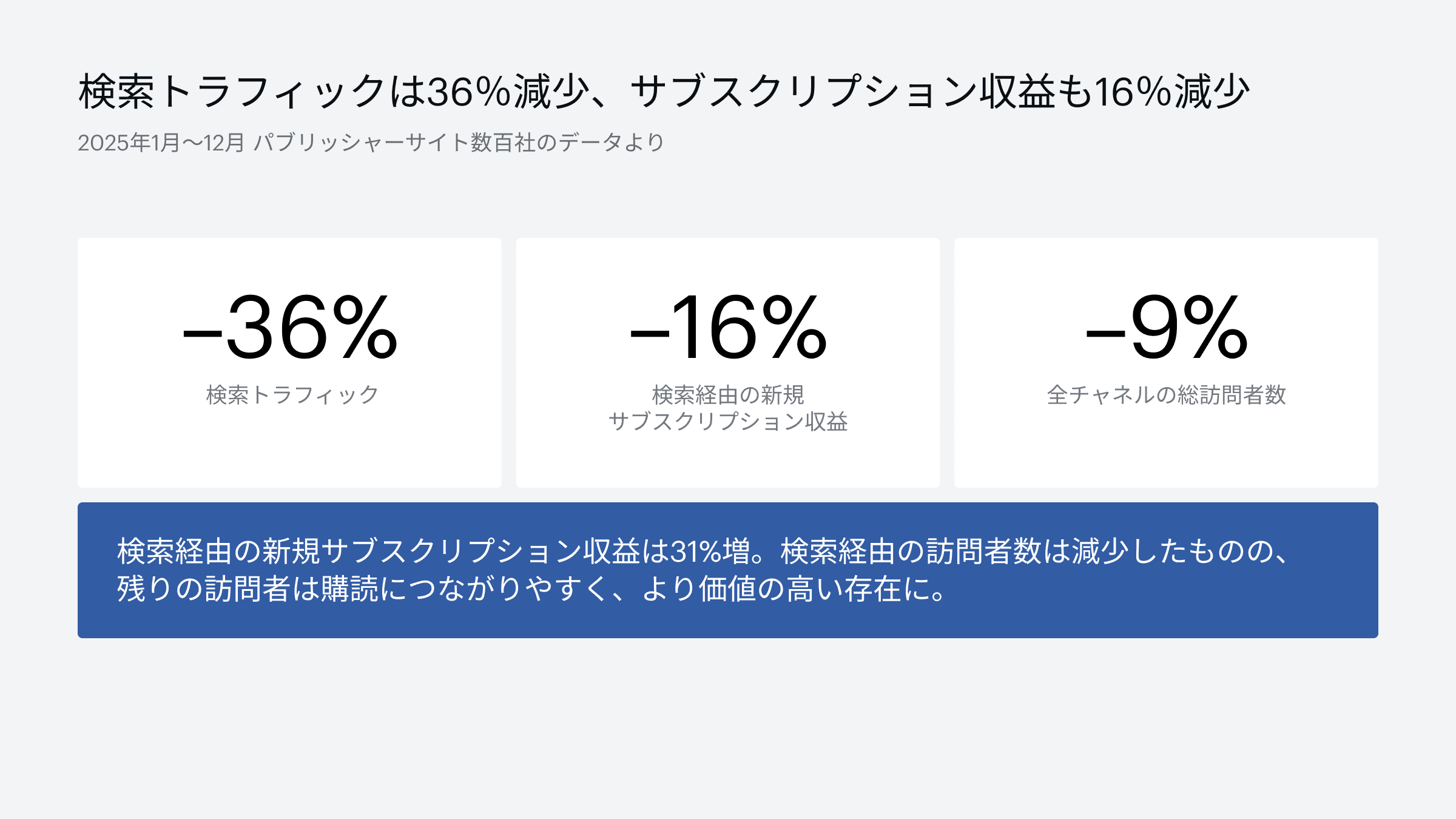
Search traffic dropped by a lot – 36%. Revenue dropped too, though only by 16%, and the overall audience was down 9%.


There were two important forces mitigating the impact of the huge drop in search. First, other traffic sources grew, partly offsetting the search decline. More significantly, the search users who disappeared weren’t as valuable as the ones who stayed – average new subscription revenue per search visitor increased 31%. 


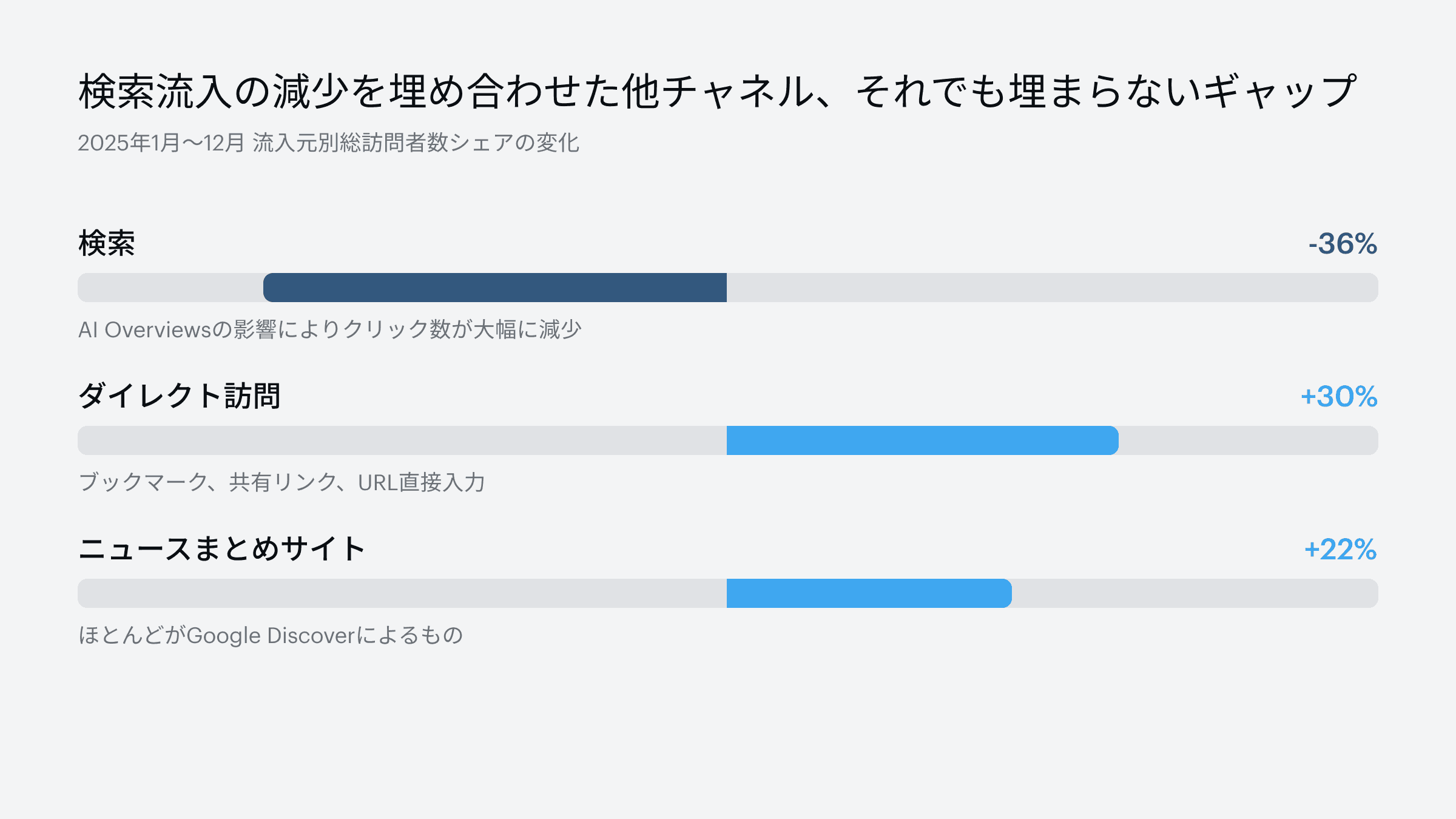
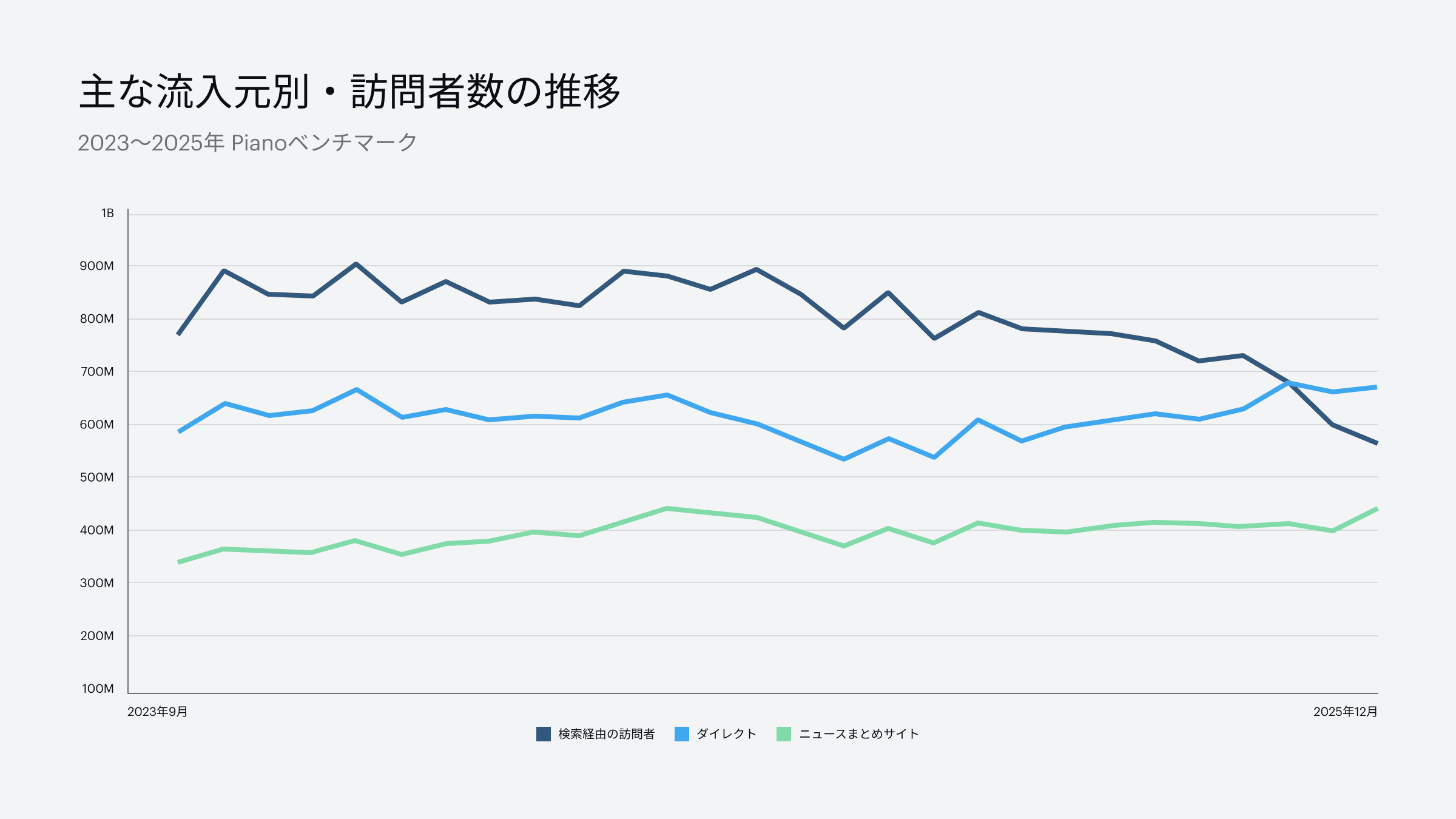
The biggest growth came from direct visits – the share of users who arrive without a referring source grew 30%. Those could be visitors who bookmark the homepage, click a shared link in a text message or email app, or directly type the URL. The share of visitors coming from direct surpassed the share coming from search for the first time in 2025.

The next biggest source of visitors after search and direct is news aggregators – Google Discover, Google News, Yahoo and Apple News, plus many other smaller sites and apps. That share grew 22%, almost entirely from Discover. Despite that growth, direct and aggregators still didn’t completely offset the siphoning of search audience. 


Engagement matters for search too  

The gap between the search traffic decline and subscription revenue decline tells an important story. That story becomes clear when we break down search visitors by engagement level. In our “Back to Basics” benchmark report we segment publisher audiences according to behavior: 

  • One-Off Visitors: 1 pageview, 1 active day per month 

  • Moderately Engaged Visitors: 2-4 pageviews, 2-3 active days per month 

  • Highly Engaged Visitors: 5+ pageviews, 4+ active days per month 

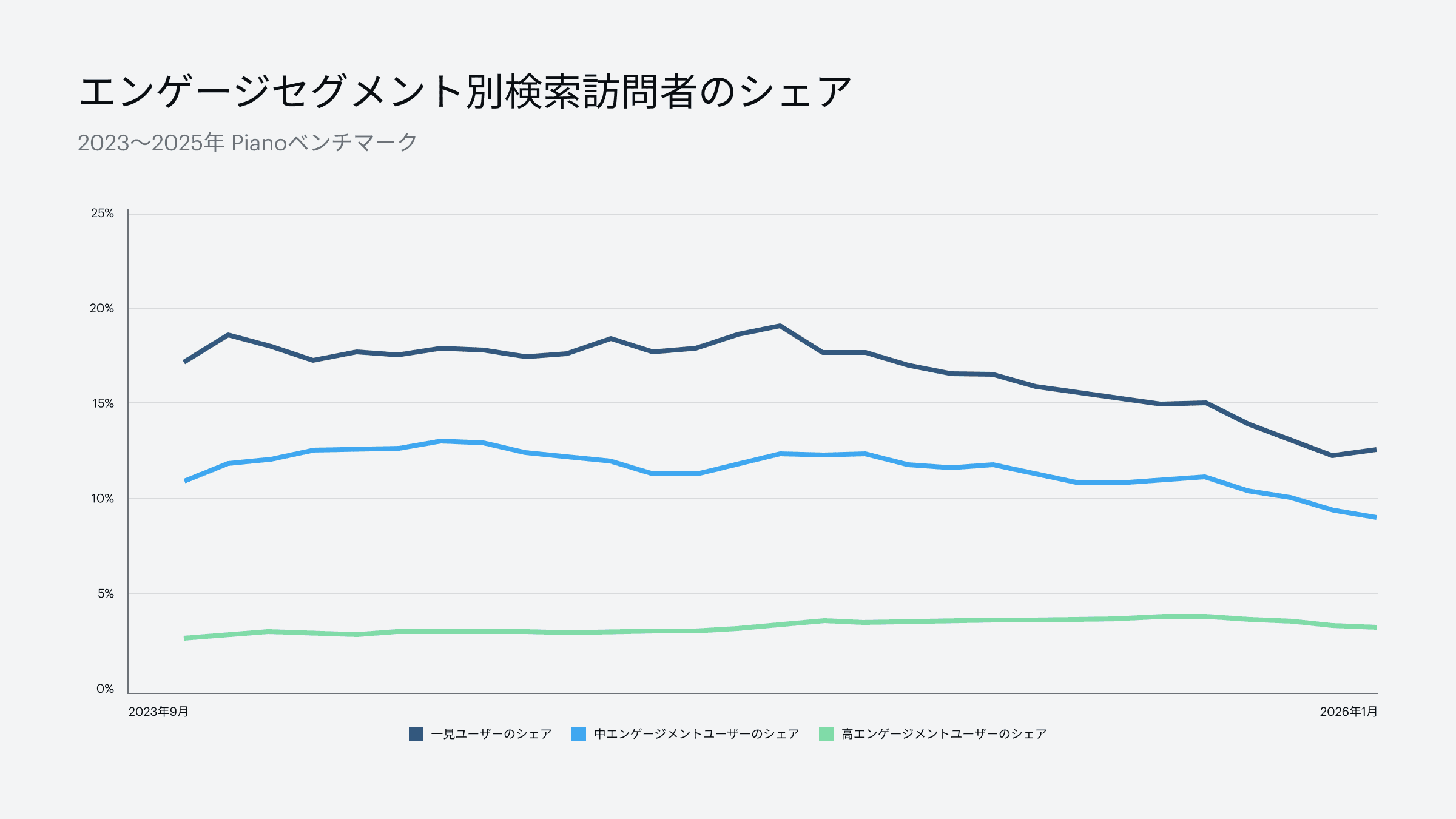
When we applied those segments to search traffic specifically, a pattern emerged: the less engaged the visitor, the steeper the decline. 

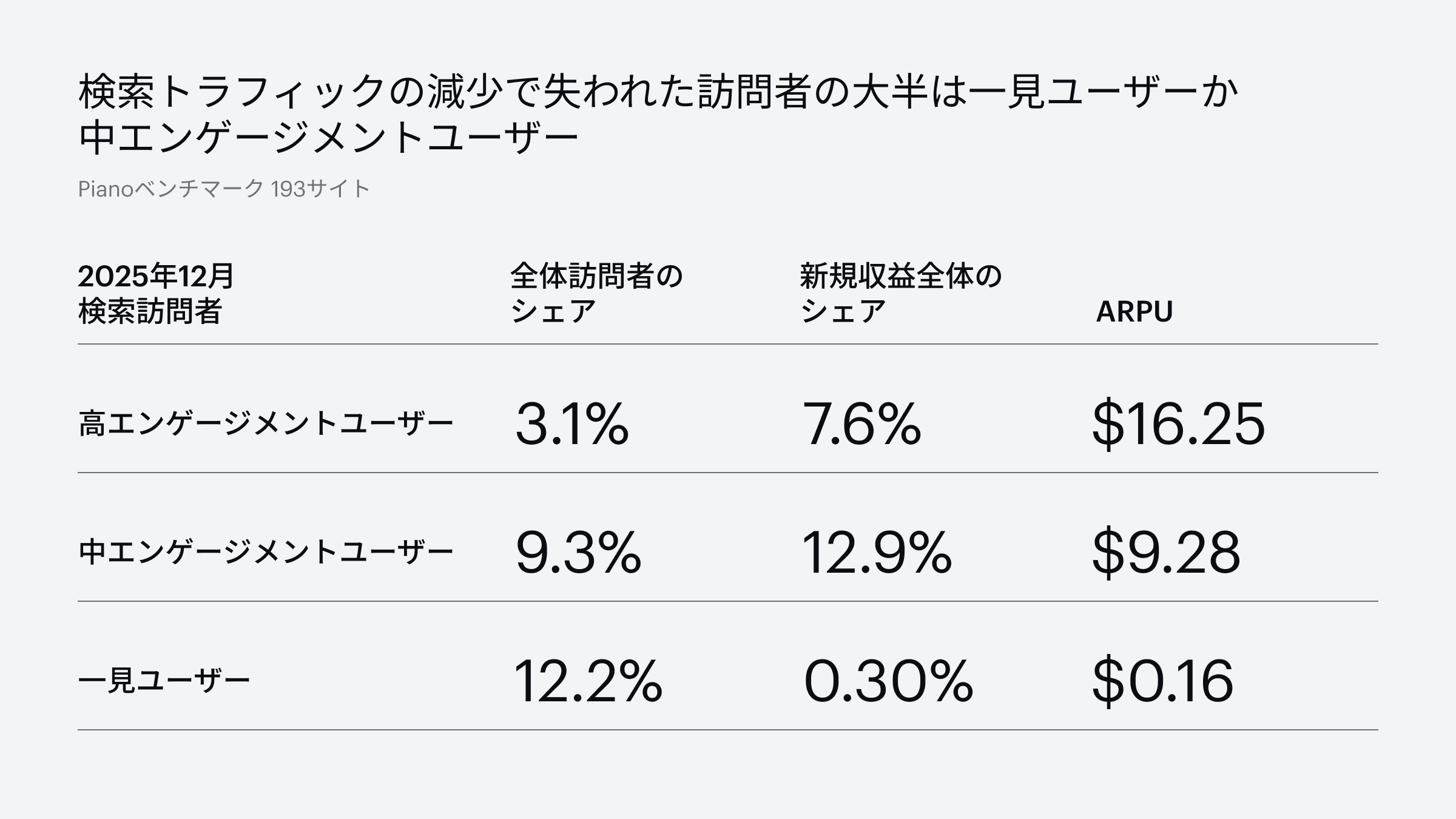
One-off visitors from search — nearly half the search audience — saw the sharpest drop. Their share of total audience fell from 18% in January to 12% by December, a 31% decline. Moderately engaged search visitors fell 25%, from 12% of total audience to 9%. Highly engaged search visitors barely moved, dipping from 3.3% to 3%. 


Here’s why that matters for revenue:

One-off visitors are nearly half of the search audience and 12% of total audience, yet they account for only 0.3% of new subscription revenue with ARPU of less than 20 cents. The visitors who disappeared were disproportionately the ones who weren’t going to subscribe anyway. 

Moderately engaged search visitors drive the largest share of search-originated subscription revenue — they're three times the size of the highly engaged group. That revenue did decline over the course of 2025. But the revenue loss from highly engaged search visitors was nearly as large, despite the group being much smaller, because those visitors convert at significantly higher rates. 


The implication is clear: the search decline hit the top of the funnel far harder than it hit revenue. The visitors who stuck around — or who can be encouraged to come back — are the ones worth the most. 

This reinforces the need to drive higher engagement from the users who are still visiting from search, with tactics like content recommendations to drive recirculation and newsletter signups to encourage repeat visits. 

AI referrals: small but worth watching 

Overall, search clicks are unquestionably down. A Pew Research Center study found a 47% reduction in clicks when AI Overviews are present. And the sources cited inside the AI Overview itself? Only 1% of users click on those. 

News and sports topics – essential for many Piano clients – seem to be somewhat insulated from the AI-driven search changes. SEMRush reported that as of November 2025 AI results only appeared on 5.4% of news queries and 3.8% of sports. That’s in contrast to 8.7% of all queries, 16% of health, 17.9% of computers & electronics and 26% of science topics. 

Piano data shows as of December, every site in the Piano benchmark is getting traffic from AI tools. That’s a notable milestone. But AI still is a tiny share of total audience – only 0.1% at its peak last October. It’s also volatile, with swings of hundreds of thousands of visitors each month across the Piano benchmark sites.  


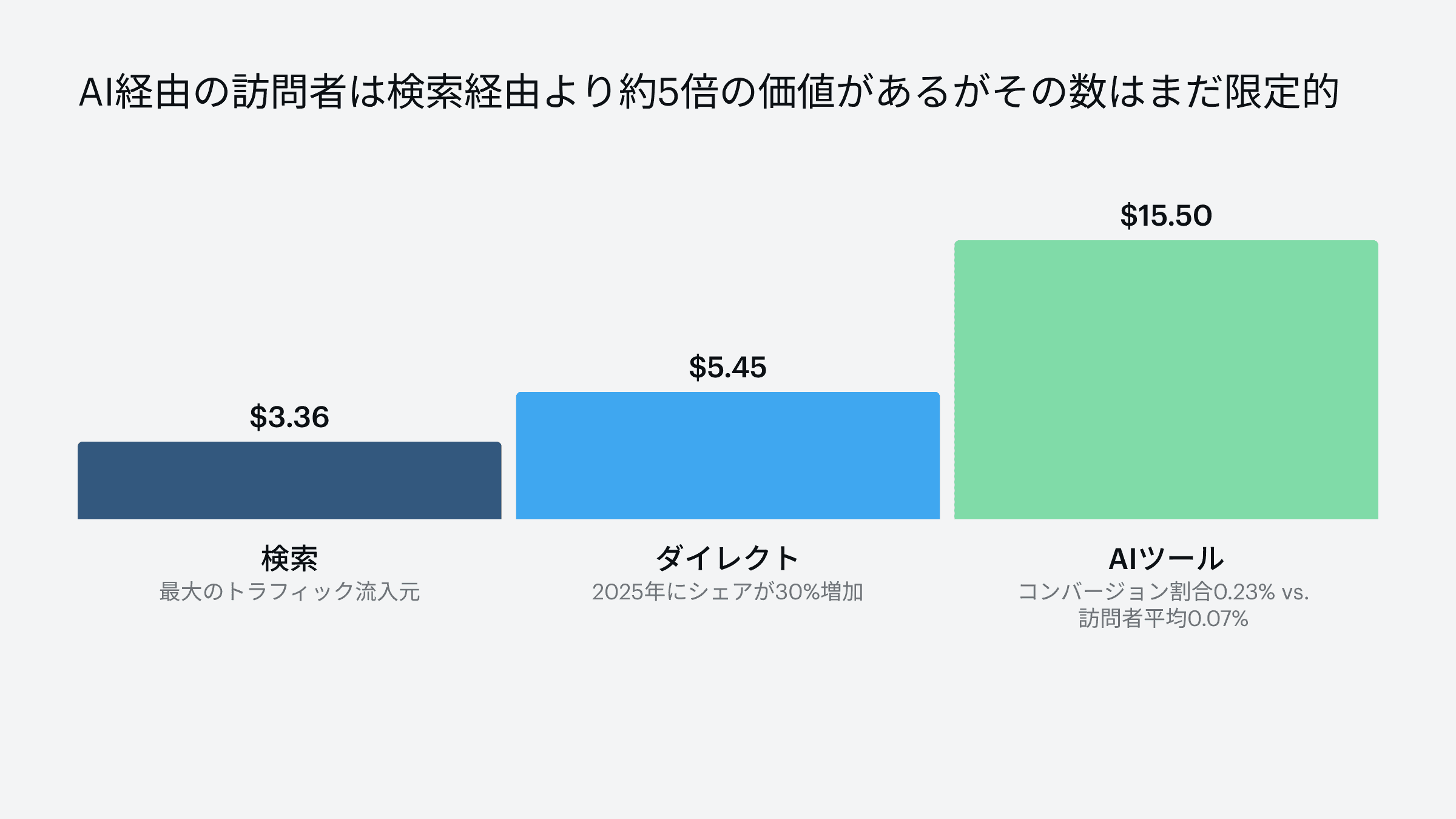
Despite the tiny traffic, we’re starting to see some interesting trends. The share of total conversions from AI tools is growing – 0.23% of total conversions in December 2025, which is more than triple the share of total visits. And while volumes are negligible, ARPU from AI tools is $15.50 compared with $3.36 for search and $5.45 for direct traffic. 

These conversions aren’t evenly distributed. A handful of companies, mostly with B2B content, are seeing real success driving subscription conversions and revenue from AI sources – success is driven by having a strong SEO/GEO presence and exclusive, valuable articles. 


The bottom line for subscription-focused publishers

Search still is a good source of conversions, even with traffic dropping. But the changes of the past year reinforce advice we’ve been giving for many years: publishers need an audience engagement strategy designed to build brand recognition, loyalty and repeat visits. SEO and now GEO/AIO (generative engine and AI optimization) are just one element in that strategy. 

In our next benchmark update we’ll look at the specific levers – pricing, churn prevention and conversion optimization – that publishers are using to grow revenue even as traffic declines. 

About the author

Michael Silberman

EVP Media Strategy

Executive sponsor for Piano’s media and publishing category, shaping how Piano’s products and services deliver value to media companies, building on 30 years of experience in digital media and a network of relationships with media executives. Michael also leads Piano’s overall messaging and thought leadership, ensuring all external communications clearly and effectively convey Piano’s products and value.

Michael Silberman

EVP Media Strategy

Executive sponsor for Piano’s media and publishing category, shaping how Piano’s products and services deliver value to media companies, building on 30 years of experience in digital media and a network of relationships with media executives. Michael also leads Piano’s overall messaging and thought leadership, ensuring all external communications clearly and effectively convey Piano’s products and value.

Michael Silberman

EVP Media Strategy

Executive sponsor for Piano’s media and publishing category, shaping how Piano’s products and services deliver value to media companies, building on 30 years of experience in digital media and a network of relationships with media executives. Michael also leads Piano’s overall messaging and thought leadership, ensuring all external communications clearly and effectively convey Piano’s products and value.

Date

Date